Shaping the Future of Fibre-Based Packaging

The Alliance for Fibre-Based Packaging provides an expert voice for the industry on key topics relating to fibre-based packaging.

Who we are

We focus on the benefits of fibre-based and paper-based composite packaging. This includes most takeaway coffee cups and widely sold ready meal and takeaway containers. This packaging does more than protect food and consumer goods, it ensures hygiene, safety, and convenience.

The Alliance represents packaging manufacturers, raw material producers and food and drink retailers, including...

Alexir
Amcor
AVA
Bender
BioPak
Caffe Nero
Colpac
Costa Coffee
Cupprint
ECMA
EP Group
Graphic Packaging
Huhtamaki
Mayr-Melnhof
Lavazza
McDonald's
M&S
ProAmpac
Sabert
SEDA
Sonoco
Stora Enso

Our Objectives

Fibre-based packaging products.

1

Ensuring that pEPR fees for fibre-based packaging are set at an appropriate level This reflects recyclability and avoids encouraging producers to switch to more carbon-intensive and less circular materials. The Alliance's concern is that the current design of pEPR may push producers towards plastic because lower base fees are assessed by weight rather than wider environmental impact.

2

Working with DEFRA on pEPR fee modulation, ensuring it creates a clear incentive for packaging producers to innovate The industry is investing millions in reducing non-fibre content in fibre-based packaging. That R&D effort should be rewarded and reinforced, not undercut by policy design.

3

Advocating for the formal inclusion of fibre-based composite cups in the paper and card recycling stream Formal inclusion would divert significant volumes from landfill or incineration and strengthen the business case for the sorting and processing infrastructure needed at scale.

FAQs

What is fibre-based packaging?+

Fibre-based packaging is made primarily from renewable materials such as paper, cardboard, and other plant-based fibres. It includes products such as boxes, cartons, bags, trays, and food packaging, and is used across a wide range of industries. Lightweight, versatile, and widely recyclable, fibre-based packaging can help protect products while supporting the transition towards a more circular and resource-efficient economy.

Why join the Alliance for Fibre-Based Packaging?+

The Alliance gives members a coordinated voice on regulation, recyclability, infrastructure and innovation so the sector can influence policy with stronger shared evidence.

What is the Alliance for Fibre-Based Packaging?+

It is an industry alliance focused on the role fibre-based and paper-based composite packaging plays in protecting products, supporting hygiene and delivering practical convenience for consumers.

What are the key issues?+

Current priorities include pEPR design, fee modulation, recyclability treatment for fibre-based composite cups and ensuring policy rewards circular innovation instead of shifting demand toward higher-carbon alternatives.

Latest news

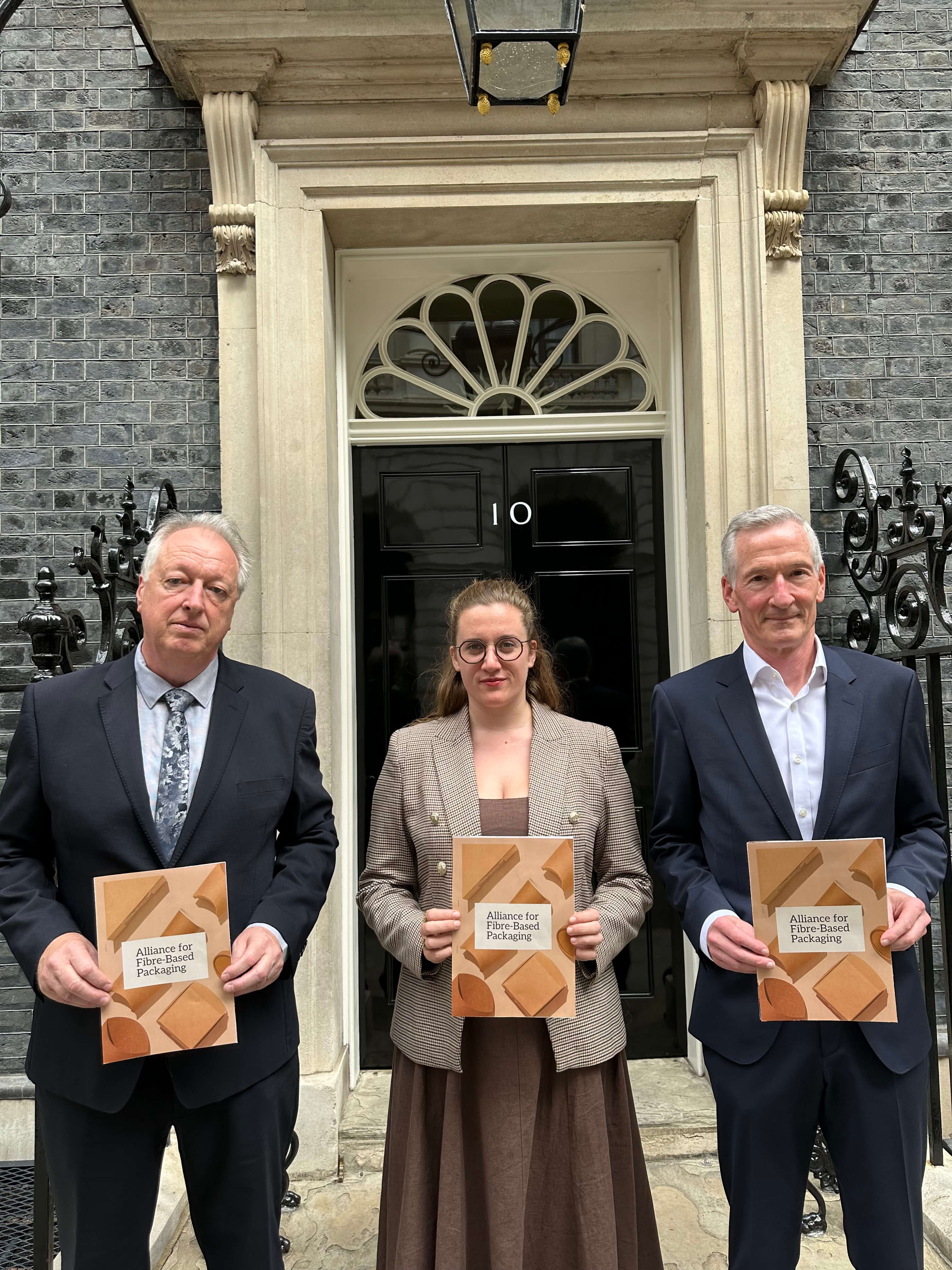
Alliance representatives outside Downing Street holding the position paper.

Press release

Sustainable packaging manufacturers tell Andy Burnham: Clear a path for innovation to drive economic growth

London, 27 July 2026

The Alliance for Fibre-Based Packaging visited Downing Street last Friday calling on Prime Minister Andy Burnham and the incoming Nature and Circular Economy Minister to remove the regulatory barriers holding back sustainable packaging innovation. Without immediate reform, the packaging Extended Producer Responsibility framework will stifle investment in more sustainable packaging instead of fossil-based plastics and hamper domestic economic growth.

The Alliance has published a position paper detailing how the current pEPR framework risks perverse outcomes. Manufacturers warn that instead of encouraging innovation, it is creating market uncertainty that could lead to a return to single-use plastics.

The incoming Minister responsible for the circular economy has an opportunity to reset engagement with industry and provide packaging manufacturers with the certainty they need to increase investment in innovation. Without that reset, there is a real risk of increased reliance on single-use plastics in the UK.

The Alliance argues that unlocking the UK’s sustainability and recycling potential will be a key driver of economic growth, re-industrialisation and job creation. It is urging the Department for Environment, Food and Rural Affairs and PackUK to work more collaboratively with industry to build an evidence-based, innovation-friendly pEPR framework.

Welcoming the Government’s focus on re-industrialisation and manufacturing, Neil Whittall, Co-Chair of the Alliance, said

"Manufacturers and retailers share the Government's vision for a circular economy, but the current regulations punish the very innovations we need. By taking a step back and refining the packaging EPR framework, we can secure vital investment, create regional jobs and boost manufacturing. If we miss this window, we will see more plastic heading straight to landfill instead of more sustainable alternatives."


To drive growth and increase recycling rates, the Alliance’s position paper outlines four key recommendations for the Government:

  • Refine the pEPR Framework: Partner with industry to redesign the pEPR fee structure so it actively incentivises sustainable materials rather than risk driving a reliance on single-use plastics.
  • Introduce Evidence-Based RAM Classifications: Implement a transparent Recycling Assessment Methodology (RAM) classification with clear phasing to provide businesses with the stability and certainty needed to innovate.
  • Publish Clear Methodologies: Release the underlying evidence and fee methodologies for both pEPR and RAM to rebuild industry confidence and transparency.
  • Make Recycling Easier: Place consistent, simple household recycling at the heart of the national strategy to make sustainable choices easy for consumers. Collection policies should ensure all paper and non-liquid FBC formats are accepted if they meet the material threshold criteria.
Read the paper
Meeting with Minister Creagh.

Meeting Minister Creagh

Discussing the role of fibre-based packaging in a circular economy.

On 10 June the Alliance for Fibre-Based Packaging met Minister Mary Creagh MP, Parliamentary Under-Secretary of State for Nature and Circular Economy at the Department for Environment, Food and Rural Affairs, to discuss the role of fibre-based packaging in supporting the UK's circular economy ambitions.

The discussion covered Extended Producer Responsibility, recyclability assessment, recycling infrastructure, innovation and the sector's contribution to the UK's environmental targets.

The Alliance welcomes the opportunity to continue engaging constructively with Government as packaging policy develops.

EPR Policy Review

EPR Policy Review

Ensuring regulation supports innovation, recycling and consumer value.

EPR policies can support a circular economy, but in their current form they risk constraining innovation, entrenching less sustainable material choices and increasing costs for consumers. The Alliance welcomes signs of a review and looks forward to engaging constructively as policy develops.

Parliamentary Engagement

Parliamentary Engagement

Building understanding of the opportunities and challenges facing the sector.

The Alliance continues meeting MPs and policy stakeholders to raise understanding of the UK's fibre-based packaging sector and to keep political engagement at the centre of industry advocacy.

Site visits

Blake Stephenson

Blake Stephenson

Conservative MP for Mid-Bedfordshire, site visit to Sabert.

Sarah Champion

Sarah Champion

Labour MP for Rotherham, site visit to Graphic Packaging International.

Suella Braverman

Suella Braverman

Reform MP for Fareham and Waterlooville, site visit to Southern Cross Packaging.

Fibre-based packaging on a table.

Got any questions?